Sarah's Kimchi Recipe

Tryptic of bowls and plates in different stacks and glazes featuring various dishes

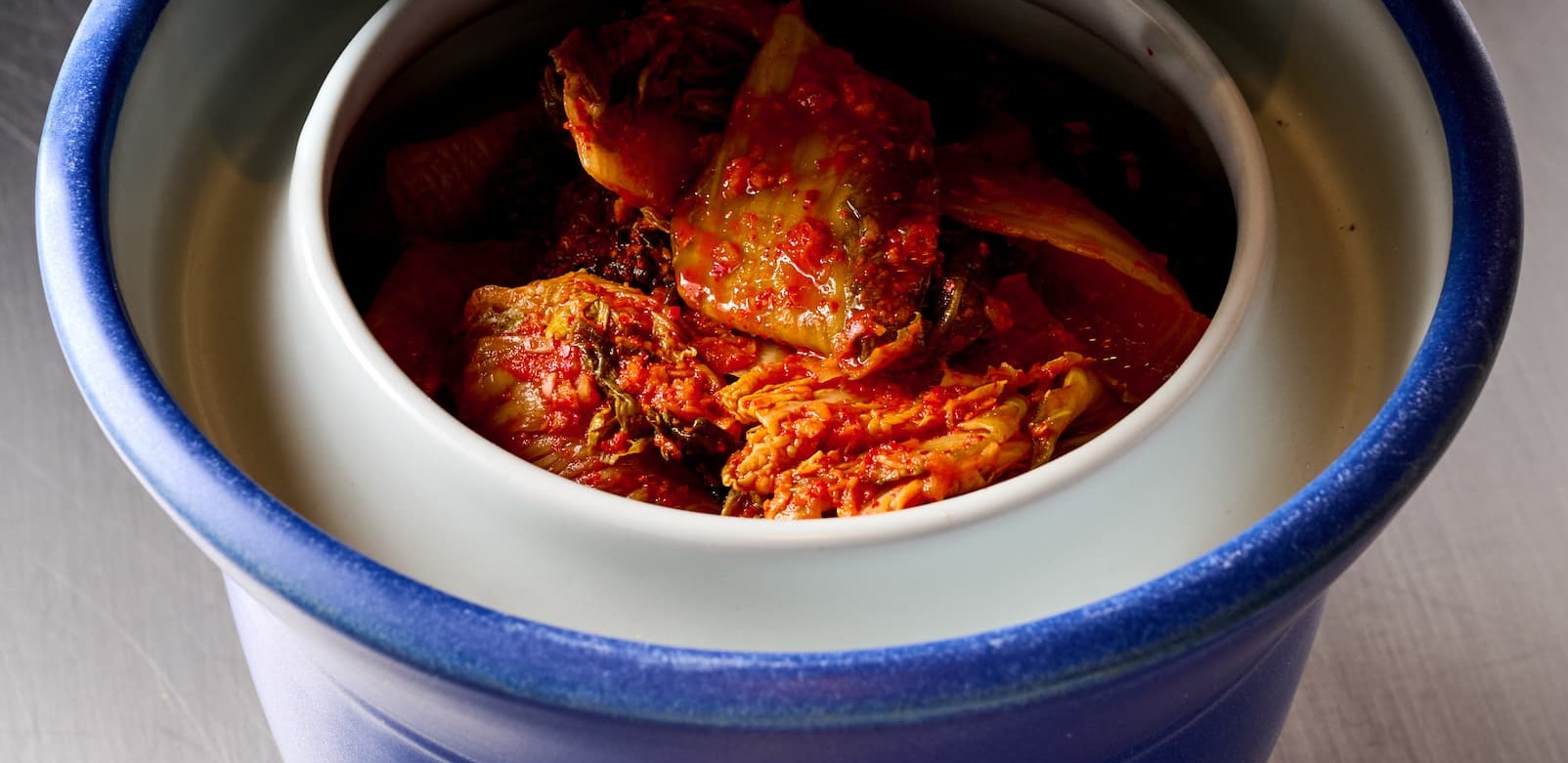
In my kitchen right now, there’s a jar of kimchi bubbling quietly on the counter. It’s one of my favorite things to make this time of year. Spicy, funky, crunchy, and endlessly satisfying. I love folding it into rice bowls or simmering it into soups.

When I started making fermentation jars back in 2009, my earliest batches of kimchi were closer to spicy sauerkraut. Simple krauts with chilis, made the same way I made everything else. This was before fermentation recipes were everywhere online, and I was still figuring it out.

The version I make now draws more directly from Korean tradition: salting the cabbage first, then combining the aromatics into a rice flour paste. That method gives the kimchi a bright, saucy texture that I love. Traditional recipes often include fermented seafood for depth, but I prefer to use seaweed and a bit of extra salt for that same umami richness.

The hippy-style spicy sauerkraut I used to make was what first inspired me to create fermentation jars, but my techniques have come a long way since then. What follows isn’t a fussy recipe. There’s plenty of room to improvise based on what you like and what you have on hand. I’ve gone heavy on the ginger before, which made for a kimchi that was too spicy to snack on but incredible stirred into a rice bowl. I love carrots and daikon so I often add extra. Bok choi brings a slightly bitter edge that I find grounding. I encourage you to play with it, trust your instincts, and make it your own.

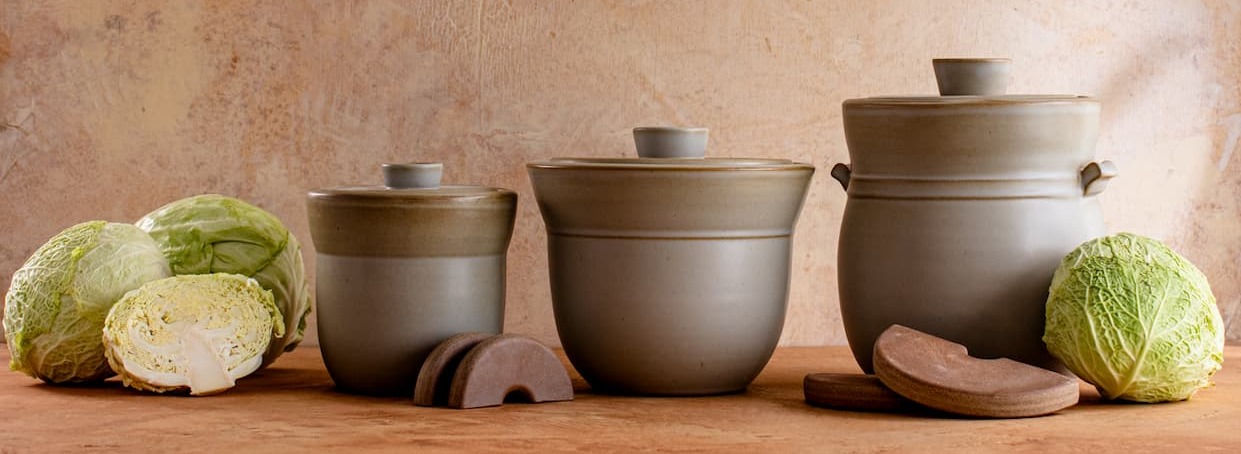
fermentation jars in three sizes with cabbages and weights
My kimchi recipe

Fills our  Medium Fermentation Jar
Prep time: ~45 minutes | Ferment: 1–3 weeks
 
You'll need:

Brine:
  • 1 gallon filtered water
  • 250g fine sea salt
Vegetables:
  • 3 lbs napa cabbage
  • 1 lb bok choi
  • 1 cup carrots, matchstick sliced
  • 1 cup daikon radish, sliced
  • 1 bunch scallions, chopped diagonally
  • A few square inches of kombu seaweed, torn into small pieces
  • 1-3 teaspoons salt to adjust (to taste)
Chili Paste:
Rice Flour Paste:
  • 1.5 cups water
  • 3 tbsp sweet rice flour
 
How to make it:
 
1. Brine the vegetables
In a large bowl or container, dissolve sea salt in filtered water. Reserve 2–3 large cabbage leaves. Halve or quarter the cabbage and bok choi, then submerge them in the saltwater. Weigh them down if needed to keep them submerged. Soak for 6–12 hours, until the leaves are wilted but still slightly crisp. Drain well.
 
2. Make the rice flour paste
In a saucepan, whisk together water and sweet rice flour until smooth. Cook over medium heat, stirring constantly, until it thickens into a glossy paste (about 3–5 minutes). Stir in the kombu and let it cool completely.

3. Mix the chili paste
Once cooled, stir garlic, ginger, and gochugaru into the rice flour paste.

4. Combine everything
Chop the drained cabbage and bok choi into 1–2" pieces. In a large bowl, mix with the carrots, daikon, scallions, and chili paste. Taste and adjust with 1-3 teaspoons of additional salt if needed. (Keep in mind that the saltiness will remain but the spice will mellow as it ferments.)

5. Pack your jar
Pack the kimchi mixture into your fermentation jar, pressing down to eliminate air pockets. Lay the reserved cabbage leaves over the top like a cap, then place the weights on top to keep everything submerged. Don't overfill the jar; the vegetables will expand as they ferment and bubble CO2. If there’s not enough brine at first, check again and press down in a couple days as it usually releases more. If needed, top off with a 2–3% saltwater brine.
 
6. Ferment
Fill the water seal and leave the jar at room temperature to ferment for 1–3 weeks. Taste as you go. It’s ready when it hits your ideal level of crunch and tang. It will continue to soften and sour over time, so refrigerate when you love it.
 
A note on vessels:
 
I designed our Fermentation Jars for recipes like this that deserve time, care, and space to transform. Each jar is hand made and glazed right here in the studio, with three sizes to suit however (or how much) you like to ferment; this recipe works well for our medium jar and makes around 3 quarts of kimchi. The wide opening makes them easy to pack, press, and clean. And they’re beautiful enough to leave on the counter while they do their slow, quiet work.
 
Happy fermenting,
Sarah
Back to blog

Leave a comment

Please note, comments need to be approved before they are published.